
The clue’s in the name.
A Far Cry was founded out of a desire to do things differently: to break the mold, think outside the box, and blaze a new trail. Amongst the ways we realize this is through unconventional programming, another is fostering an open accessibility to our audience, but those two streams can clash. It’s a classic conundrum: those who seek to circumvent tradition are often deeply steeped in it, and so the circumventing – although an attempt to break with convention or to be more “real” – can come across as more niche.
And so bienvenue(!) to the program I brought to the group some time ago, originally entitled Hysteron Proteron.
The seed was planted when I learned of the existence of the now-defunct Hysteron Proteron Club at Oxford University. Taken from a phrase from ancient Greek meaning “later earlier” or “the end before the beginning,” and exemplified by phrases like "then came the thunder and the lightning" and “putting the cart before the horse,” the club was centered around eccentric eating, namely eating backwards. In more basic iterations they would begin their dinners with dessert and end with soup; in the most extreme, they would begin their days smoking cigars and drinking scotch and end them with breakfast.
It got me thinking about the standard conventions of instrumental classical programming (symphony orchestras, string quartets, and the like), usually beginning with something “light”; then a middle slot allotted either to a concerto or to a spicy contemporary work; then ending with a larger (usually Romantic) “war horse,” plus an encore if all goes exceptionally well. It’s not unlike a multi-course meal: a light appetizer, a salad (possibly with bitter greens for the contemporary music parallel), a main, and a dessert. Looking back, it doesn’t surprise me that this program was a creation of my 20s, still relatively newly independent and asking: why can’t I eat dessert first?
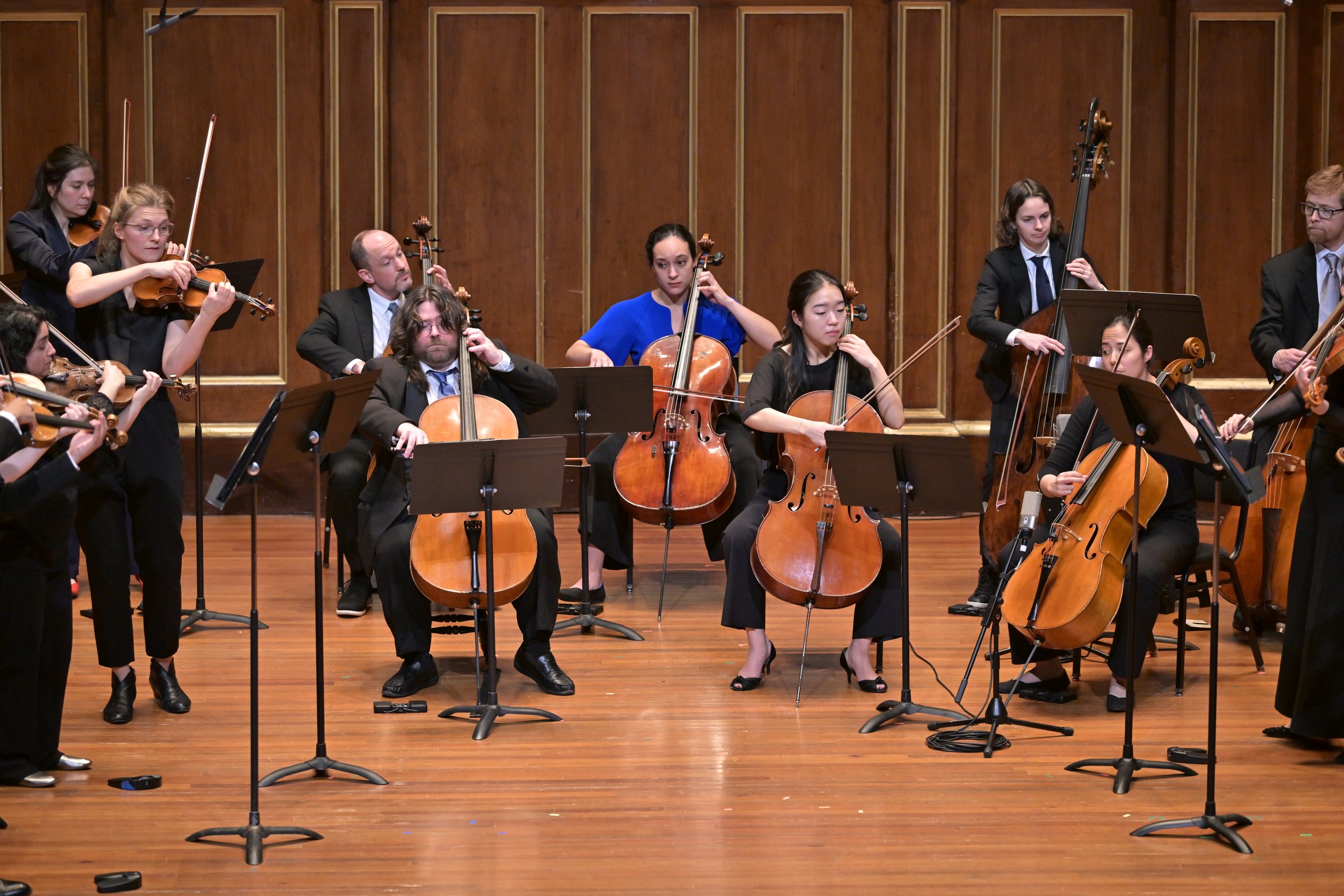
And so we get this iteration of Hysteron Proteron, actually entitled Side by Side in honor of the brilliant musicians who’ll be joining us from our educational partners at Project STEP and the New England Conservatory: starting with one of AFC’s signature encores, Taraf de Haidouks’ Turceasca; then Stravinsky’s grand ballet score Apollon Musagète; Joan Tower’s White Water follows intermission; and we end with two Corelli concerto grossos.
Over my 15 years with A Far Cry, every program I’ve proposed to the group has sought to offer a different program template in some way, mostly out of curiosity: how might it change how we listen to and experience the music? And also searching for something more organic, that might frame the music more aptly or put the composers and their works into a more lively conversation.
There’s also a desire, with this program especially, to remediate a (very minor and harmless, but nevertheless very real) hierarchical subordination: in the “standard model” of concert programming, we would never perform the music of a composer born before Beethoven – “lighter” Classical or Baroque works – at the honored end of a program.
For me, this is no way to treat Corelli, widely considered to be the finest composer in Europe during his lifetime. People would travel for months to see him, his music was imitated and transcribed from England to France to Germany, and he is the only composer buried in Rome’s Pantheon, next to the painter Raphael. He established the string orchestra as an entity, which would gradually become the foundation of the modern-day symphony orchestra, and we constantly find nods to him in later music, from Tchaikovsky to Bartok to contemporary works.
He achieved all of this – in the shadow of the Vatican – living as an out gay man, or as close as one could come to that around the turn of the 18th century. While there is little documentary evidence relating to his personal life, we know that he never married or had children, that he lived much of his adult life under the same roof as his partner, and that he left nearly all of his possessions (including his art collection, instruments, scores, and the rights to his music) to him in his will. That partner was Matteo Fornari, the principal second violinist of his orchestra.
Now take that context and listen to his music, the two solo violins embracing, ribbing, and dancing around each other, bolstered and buffeted by the ensemble around them. It adds up to one of the great love stories I know, transmitted across centuries through vivid, touching, joyful music.
And if you’re going to tell me that is too light to end a concert, we need to have words.
Enjoy!
